Product description
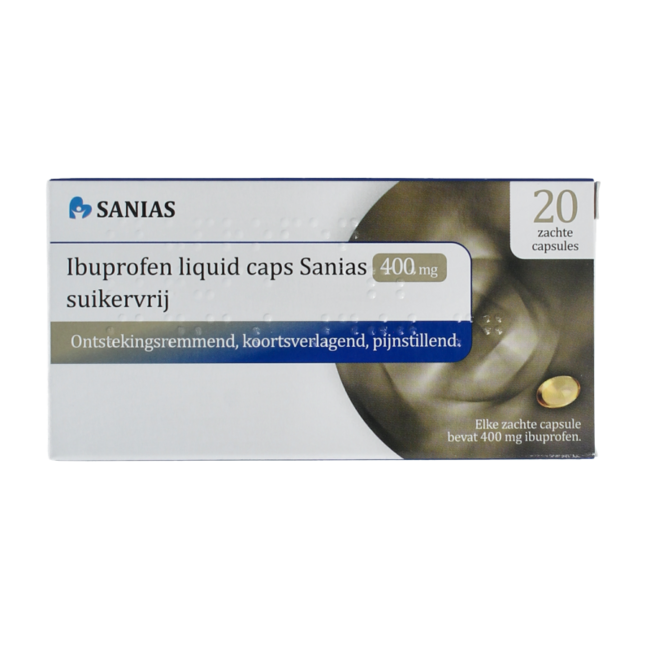
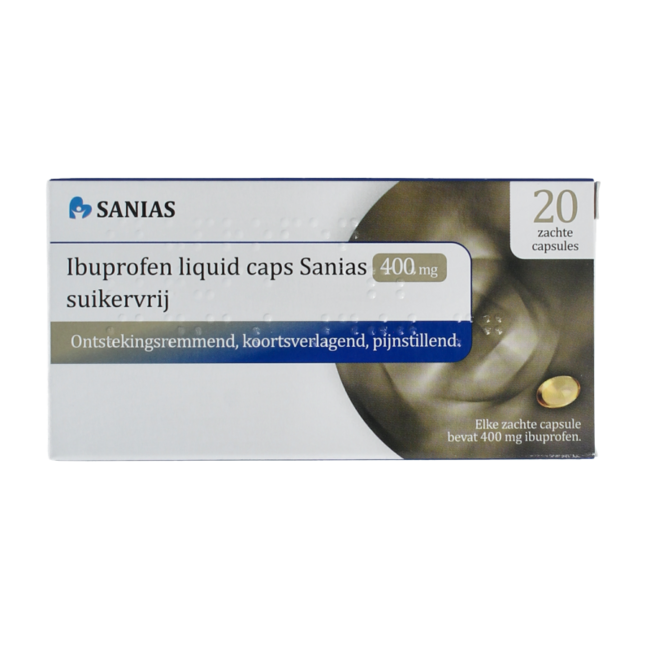
Sanias Ibuprofen liquid 400mg sugar-free
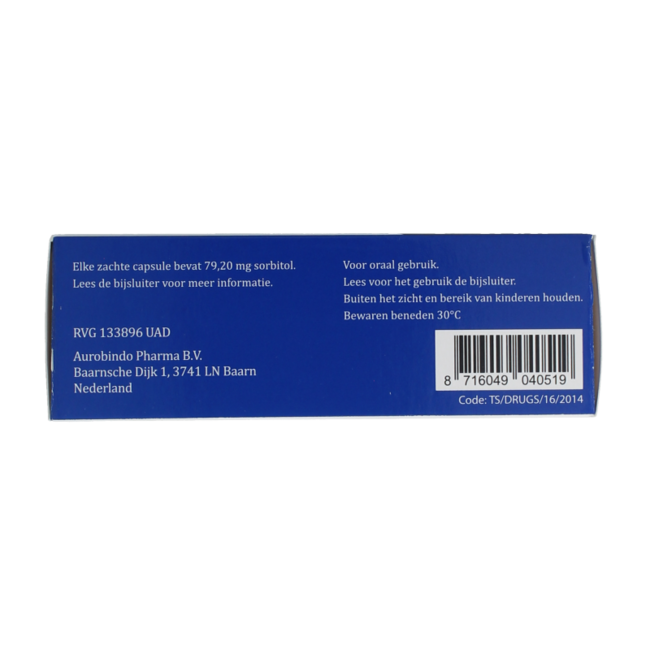
RVG 133896 UAD
Ibuprofen liquid caps Sanias 400 mg sugar-free, soft capsules
Ibuprofen liquid caps Sanias 400 mg sugar-free contains the active substance ibuprofen.
This substance belongs to a group of medicines called non-steroidal anti-inflammatory drugs (NSAIDs). These medicines provide relief by changing the body's response to pain and high temperature.
What this medicine is used for
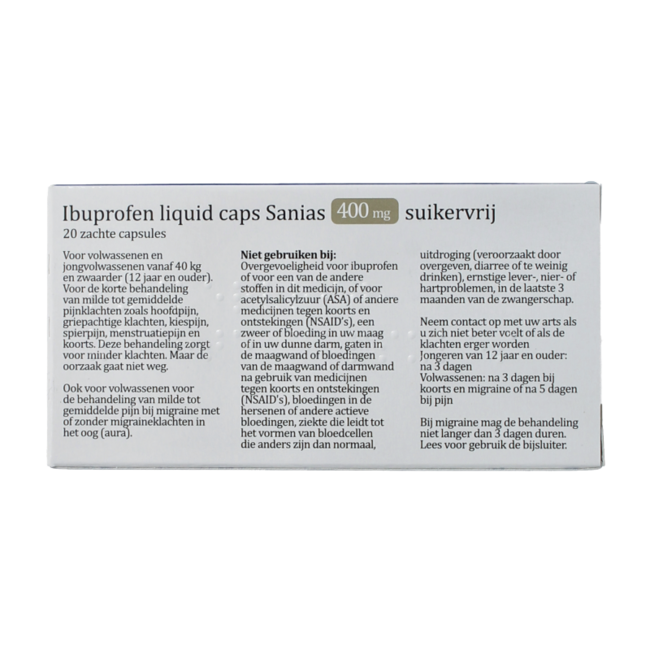
This medicine is used in adults and young adults with a body weight of 40 kg or more (12 years or older). This medicine is used for the short-term treatment of symptoms of mild to moderate pain such as headache, flu-like symptoms, toothache, muscle pain, menstrual pain and fever.
This medicine can also be used in adults for the treatment of mild to moderate pain during migraine with or without migraine symptoms in the eye (aura).
Do not use if
• you are allergic to ibuprofen or to any of the other ingredients in this medicine.
• if you have had allergic reactions after using medicines containing acetylsalicylic acid (ASA) or other medicines for fever and inflammation (NSAIDs).
Allergic reactions can include: asthma, difficulty breathing, swelling of the face, tongue or throat, skin rash with pink bumps and severe itching (hives) or an itchy runny nose.
• if you suffer (or have suffered twice or more) from an ulcer or bleeding in your stomach or in your small intestine.
• if you have suffered from holes in the stomach wall (gastrointestinal perforation) or bleeding of the stomach wall or intestinal wall after using medicines for fever and inflammation (NSAIDs).
• if you currently have bleeding in the brain or other active bleeding.
• if you have a disease of unknown cause that leads to the formation of blood cells that are different from normal.
• if you are severely dehydrated (caused by vomiting, diarrhoea or drinking too little).
• if you have severe liver, kidney or heart problems.
• if you are in the last 3 months of pregnancy.
Take extra care with
Contact your doctor or pharmacist before using this medicine.
• if you have recently had major surgery.
• if you suffer or have suffered from asthma or allergies because there is a risk of breathlessness.
• if you have the following diseases: hay fever, nasal polyps or long-term (chronic) lung diseases with permanent narrowing of the airways, because the risk of an allergic reaction is higher. The allergic reactions that can occur are: asthma attacks (analgesic asthma), Quincke’s oedema or skin rash with pink bumps and severe itching (hives).
• if you have ever suffered from ulcers in the stomach or intestine (see also “When should you not use this medicine?”).
• if you have or have had a long-term (chronic) intestinal inflammation (for example, inflammation of the large intestine with ulcers (ulcerative colitis), inflammation of the digestive tract (Crohn's disease).
• if you have a disease where your immune system does not work properly and your body makes itself ill (systemic lupus erythematosus) or if you have mixed connective tissue diseases (a disease affecting the skin, joints and kidneys).
• if the formation of blood cells in your body is different from normal due to a genetic disease (for example, acute intermittent porphyria).
• if you have problems with blood clotting.
• if you use other NSAIDs. Use together with other NSAIDs, including cyclooxygenase-2 specific inhibitors, increases the risk of side effects (see section “Are you using any other medicines?”). These medicines should therefore not be used at the same time.
• if you have chickenpox (varicella) it is advisable not to use this medicine.
• if you are elderly.
• if you suffer from kidney or liver problems.
• if you have an infection – see section “Infections” below.
• there have been reports after the use of ibuprofen of symptoms of an allergic reaction to this medicine, including breathing problems, swelling of the face and neck (angio-oedema) and chest pain. If you notice any of these symptoms, stop using this product immediately and contact your doctor or emergency services directly.
• there have been reports after treatment with ibuprofen of serious skin side effects including exfoliative dermatitis, erythema multiforme, Stevens-Johnson syndrome, toxic epidermal necrolysis, drug reaction with eosinophilia and systemic symptoms (DRESS) and acute generalised exanthematous pustulosis (AGEP). Stop using Ibuprofen liquid caps Sanias 400 mg sugar-free and seek medical help immediately if you get one or more symptoms related to these serious skin side effects mentioned in section 4 of the leaflet.
Infections
This medicine can hide symptoms of infections, such as fever and pain. It is therefore possible that due to this medicine, proper treatment for an infection is only given later. This can lead to a higher risk of problems. This has been seen in pneumonia and skin infections caused by bacteria that can occur if you have chickenpox. Are you using this medicine while you have an infection, and do the symptoms of your infection persist or get worse? Contact your doctor immediately.
Have you ever suffered from stomach or intestinal ulcers, are you older or are you simultaneously using a low dose of acetylsalicylic acid or other medicines that increase the risk of gastrointestinal complaints (See “Are you using any other medicines?”)? Then start the treatment with the lowest possible dose available.
Your doctor may give an additional treatment with medicines that protect the stomach lining (for example, misoprostol or proton pump inhibitors). If you suffer from abnormal stomach complaints, especially if they are symptoms of bleeding such as vomiting blood or black tarry stools (See also section 4 “Possible side effects”)? Tell your doctor.
Anti-inflammatories/painkillers such as ibuprofen can cause a slightly higher risk of a heart attack or stroke, especially if you use a lot of the medicine. You must not use the medicine in a higher amount or for a longer time than advised (see section 3).
Discuss your treatment with your doctor or pharmacist before taking this medicine if you:
• have heart problems, including heart failure, chest pain, or if you have had a heart attack, bypass surgery, poor circulation in legs or feet due to narrow or blocked arteries (peripheral arterial disease) or a stroke (including “mini-stroke” or transient ischaemic attack “TIA”).
• have high blood pressure, diabetes or more cholesterol in your blood than normal, a family history of heart problems or stroke, or if you smoke.
Severe, potentially life-threatening skin reactions have been reported with the use of this medicine (Stevens-Johnson syndrome, toxic epidermal necrolysis). The risk of these types of reactions is higher during the first month of using this medicine. Do you get a skin rash, damage (lesions) to the mucous membranes or other allergy symptoms (see section 4)? Stop taking this medicine and contact your doctor or pharmacist.
Use the lowest dose that works and use the medicine for as short a time as possible. This will reduce side effects. If you are older, you may experience side effects more quickly.
Skin reactions
Severe skin reactions have been reported with the use of this medicine. Do you get a skin rash, damage (lesions) to the mucous membranes, blisters or other allergy reactions? Stop taking this medicine and seek medical help immediately. These could be the first symptoms of a very serious skin reaction.
Regular use of (different types of) painkillers can cause permanent serious kidney problems. The risk of this may be greater when there are physical problems due to the loss of salts and dehydration. This medicine should therefore not be used for a long time.
Long-term use of any form of painkiller for headache can make the headache worse. Do you suffer from this or do you think you suffer from this? Then stop using ibuprofen and contact your doctor. Medication-overuse headache can be a cause in patients with frequent or daily headaches despite (or because of) the regular use of headache medicines.
When you use this medicine for a long time, you must have your liver function, kidney function and blood tested. Your doctor may request blood tests during use.
Children and young people up to 18 years This medicine can cause kidney problems in children and young people up to 18 years who are dehydrated.
Do not use this medicine in young people between 12 and 18 years who weigh less than 40 kg.
Also, do not use the medicine in children under 12 years.
Are you using any other medicines?
Ibuprofen liquid caps Sanias 400 mg sugar-free can affect or be affected by some other medicines. For example:
• medicines against blood clotting (anticoagulants, such as acetylsalicylic acid, warfarin or ticlopidine).
• medicines that lower blood pressure (ACE inhibitors such as captopril, beta-blockers such as atenolol, angiotensin-II receptor blockers such as losartan).
Some other medicines may also affect or be affected by treatment with Ibuprofen liquid caps Sanias 400 mg sugar-free.
Use during pregnancy and breastfeeding
Pregnancy, breastfeeding and fertility
Are you pregnant, do you think you are pregnant, do you want to become pregnant or are you breastfeeding? Then contact your doctor or pharmacist before using this medicine.
Pregnancy
Do not use this medicine in the last three months of pregnancy; this can harm your unborn child or cause problems during delivery. Your unborn child may suffer from kidney and heart problems. This medicine can affect the susceptibility of you and your baby to bleeding and lead to the delivery taking place later or lasting longer than expected.
Do not use this medicine during the first six months of pregnancy, unless absolutely necessary and recommended by your doctor. If you need to be treated during this period or while trying to become pregnant, the lowest dose should be used and the treatment should be kept as short as possible. From week 20 of pregnancy, this medicine can lead to your unborn child getting kidney problems, which can result in the child having too little amniotic fluid around them (oligohydramnios) or narrowing of a blood vessel in your baby's heart (ductus arteriosus). If you need to be treated for longer than a few days, your doctor may advise additional checks.
Breastfeeding
Ibuprofen can pass into breast milk in very small amounts. There are currently no known harmful consequences for the baby. It is therefore not necessary to stop breastfeeding if ibuprofen is used for a short time and at the recommended dose for fever and pain.
Fertility
This medicine belongs to a group of medicines (NSAIDs) that can reduce fertility in women. This is reversible once the medicine is no longer taken. Do you want to become pregnant or do you have problems getting pregnant? Contact your doctor.
Other information
Have you taken too much of this medicine?
Possible symptoms are nausea, stomach pain, headache, vomiting, diarrhoea, tinnitus, vomiting blood and blood in the stool. More serious poisonings can lead to dizziness, drowsiness, agitation, confusion, low blood pressure, breathing less frequently than normal (respiratory depression), blue discolouration of your skin and mucous membranes (cyanosis), loss of consciousness, seizures and coma. In very serious poisonings, it may take longer for your blood to clot than normal, your kidneys may suddenly stop working properly (acute kidney failure), liver damage may occur and a worsening of asthma in asthma patients may occur.
Always contact your doctor immediately if you have taken too much of this medicine, even if you feel well.
Have you forgotten to use this medicine?
Read the instructions for use above. Do not take more than advised.
Do not take a double dose to make up for a forgotten capsule.
Do you have any other questions about the use of this medicine? Then contact your doctor or pharmacist.
This medicine contains sorbitol
This medicine contains 79.20 mg sorbitol per capsule.
Sorbitol is a source of fructose. Has your doctor told you that you (or your child) have an intolerance to certain sugars or do you have a rare genetic disease where you cannot break down fructose (hereditary fructose intolerance (HFI)? Then contact your doctor before you (or your child) take or use this medicine.
Active ingredients
The active substance in this medicine is ibuprofen. Each capsule contains 400 mg ibuprofen
Excipients
The other substances in this medicine are:
Capsule content: Macrogol 600, potassium hydroxide
Capsule wall: Gelatin, liquid sorbitol
Printing ink: substances in the printing ink (black):
Black iron oxide (E172)
Propylene glycol (E1520)
Hypromellose 2910 (6cP).
Dosage
Mild to moderate pain and/or fever
Adults and young people weighing more than 40 kg (12 years and older):
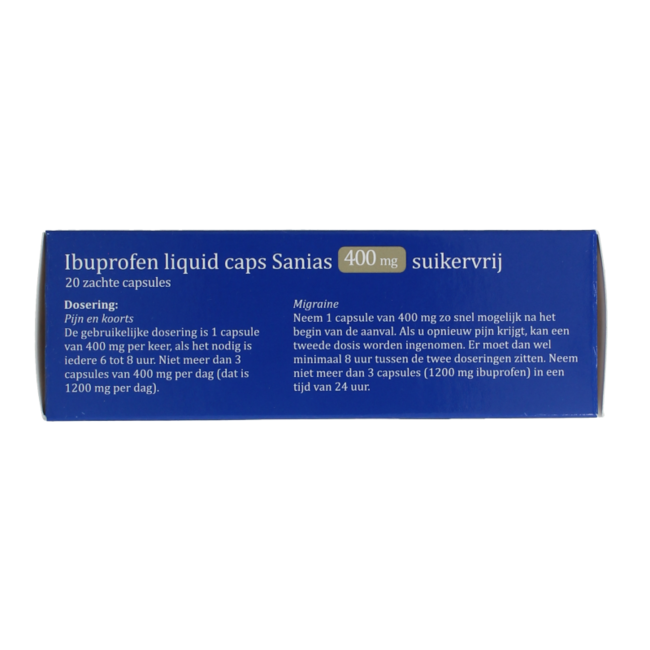
The recommended single dose is 1 capsule of 400 mg. This dose may be taken up to 3 times a day as needed with intervals of 6-8 hours. Do not take more than 3 capsules (1200 mg ibuprofen) in a 24-hour period.
In the elderly, there is an increased risk of side effects. Use the lowest dose that works and use the medicine for as short a time as possible. This will reduce side effects.
Do not take more than the recommended dosage and for no longer than the recommended period (3 days for young people up to 18 years; 3 days for fever and 5 days for pain in adults).
This medicine must not be used by young people with a body weight lower than 40 kg and by children under 12 years.
In case of a migraine attack
Adults
Take one capsule of 400 mg as soon as possible after the start of the attack.
If the symptoms are not reduced after the first dose, a second dose must not be taken during the same attack.
The attack can then be treated with another medicine. This must not be a non-steroidal anti-inflammatory drug (NSAID) or acetylsalicylic acid.
If the pain recurs, a second dose can be taken. There must be at least 8 hours between the two doses. Do not take more than 3 capsules (1200 mg ibuprofen) in a 24-hour period.
Do you not feel better or do you feel worse after 3 days? Contact your doctor.
Instructions for use
This medicine must be swallowed whole with plenty of water. Do not chew the capsules.
Read the leaflet before use.
Note the maximum daily dosage.
Responsible for marketing
Aurobindo Pharma B.V.,
Baarnsche Dijk 1,
3741 LN Baarn