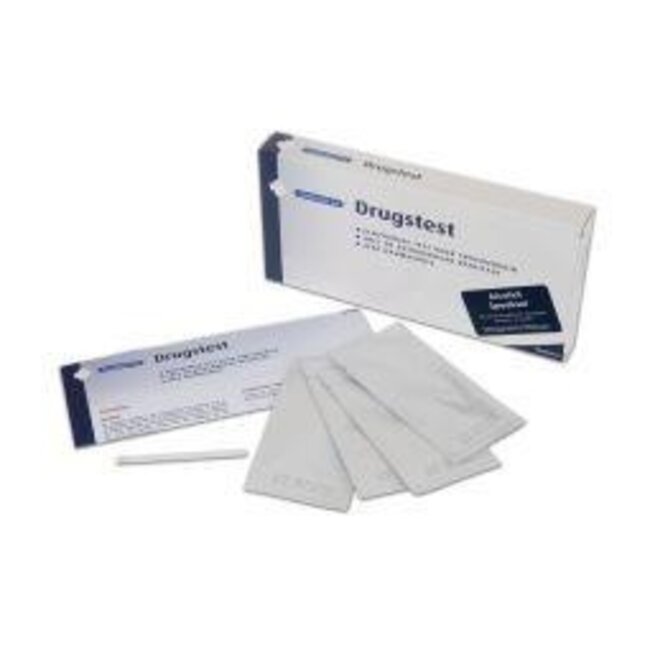
Sometimes it is necessary to get clarity quickly and discreetly about the presence of alcohol, whether you are checking your own well-being or caring for others. Uncertainty can lead to doubts about safety and health in your daily routine. The Testjezelf.nu Alcohol saliva test offers a reliable result within a few minutes, allowing you to maintain control over your vital choices.
- Provides a clear result on the presence of alcohol in saliva after just 2 minutes.
- Offers a wide detection period of up to 12 hours after the last consumption.
- Suitable for both saliva measurements and testing liquids and drinks.
- Simple and hygienic to use thanks to individually packaged test strips.
How it works
These test strips use a reaction field that changes colour upon contact with alcohol. By briefly exposing the strip to saliva or a liquid, an enzymatic reaction starts. As your trusted health partner, VitAdvice offers you an innovative method to gain quick insight, supported by a clear colour scale for accurate interpretation.
Composition
| Type | Test strips |
|---|
| Contents | 5 pieces |
|---|
| Brand | Testjezelf.nu |
|---|
| Weight | 1001.000 kg |
|---|
Ingredients
Test strips.
Usage & Dosage
Remove the test strip from the plastic pouch. Avoid direct contact with the reaction field at the end of the test strip. The reaction field should be cream-coloured (light yellow). If the reaction field is green or dark green/grey before starting the test, the test strip must not be used. Thoroughly moisten the reaction field with saliva or liquid directly from the mouth or from a cup. Start the timer immediately afterwards. Read the result after 2 minutes. Compare the colour on the reaction field of the strip with the colour scale on the pouch. A colour change on the strip to bright green or dark green/grey indicates the presence of alcohol.
Safety & Disclaimer
Note: The test must not be read after 3 minutes! Reading after 3 minutes can give a false positive result. The following substances can influence the test result when testing in liquids other than saliva. Substances that strengthen the colour change: Peroxide, Strong oxidising agents. Substances that weaken the colour change: Ascorbic acid (Vitamin C), Tannic acid, Pyrogallol mercaptan and thiols, Toluene, Oxalic acid, Uric acid, Bilirubin, L-dopamine, L-Methydopamine, Methampyron.